
Under-Sink vs. Whole-House Filtration: Which One Does Your Home Need?
Under-sink or whole-house water filtration, which option is best for your Melbourne home? A practical guide to installation, cost, and maintenance for Australian homeowners.
On This Page
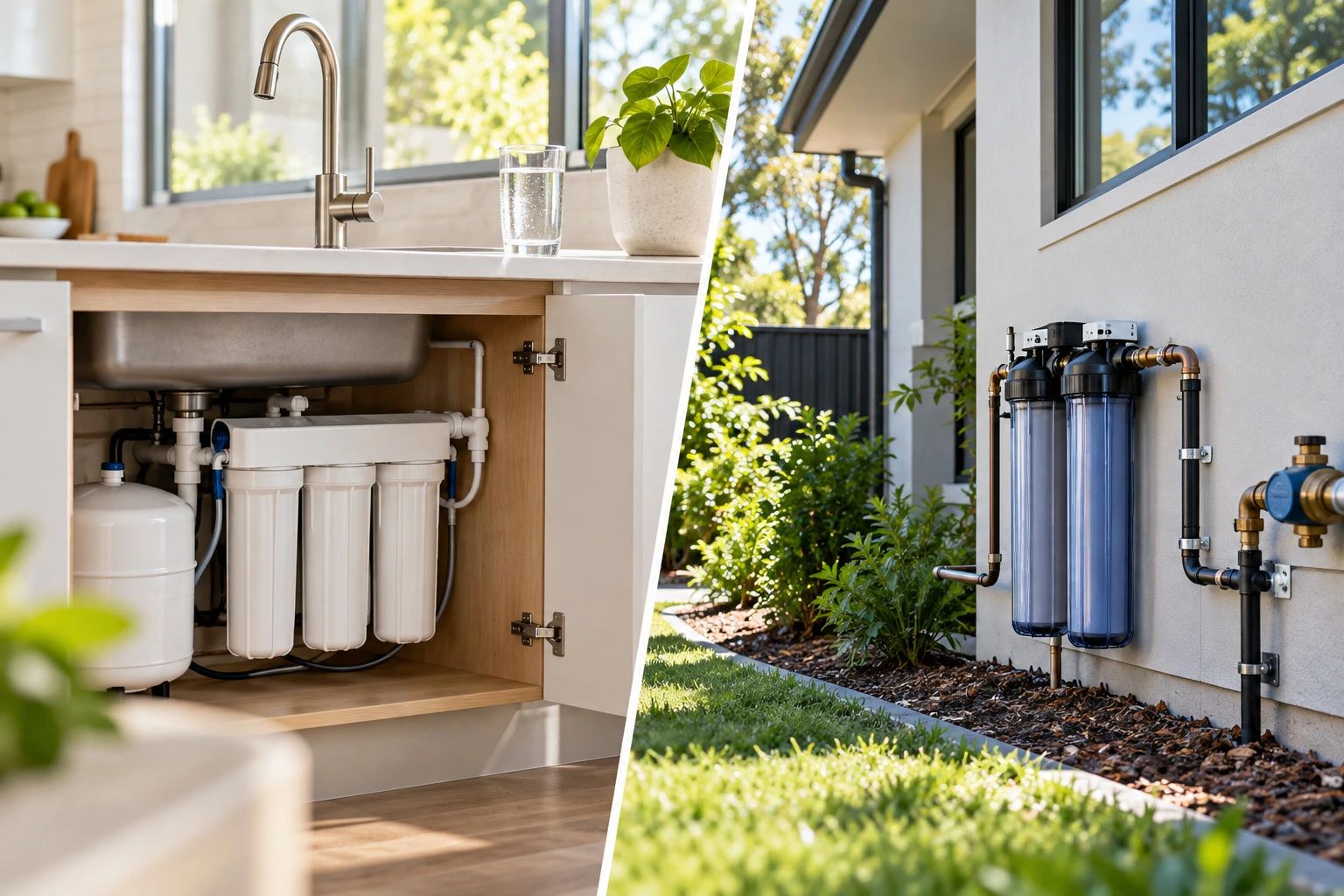
Many Melbourne homeowners start looking into water filtration for a fairly ordinary reason: the kitchen tap has started tasting faintly of chlorine, or there's sediment showing up in the kettle. Others are mid-renovation and figure it's the right time to sort water quality properly, rather than bolt something on later. Tap water in Australia meets national treatment and testing standards, but not every household is satisfied with its taste or wants it at every outlet.
Once you start comparing options, the real decision isn't which brand to buy; it's whether you want filtered water at one tap or throughout the whole house. If you're researching water filtration installation in Melbourne, under-sink and whole-house systems solve genuinely different problems, and the right one depends on what you're actually trying to fix.
What Is an Under-Sink Water Filter?
An under-sink filter sits in the cabinet beneath your kitchen sink and connects to the cold water line feeding that tap. It's usually plumbed to a dedicated filtered tap, so under-sink water filter installation is a fairly contained job compared with treating the whole home.
This is point-of-use filtration. It treats the water at the tap you actually drink and cook from, rather than everything that enters the house. For a couple who mainly want better-tasting coffee and tea and aren't fussed about shower or laundry water, that's exactly the coverage they need.
What it removes depends entirely on the filter media. A basic carbon filter installation targets chlorine removal and odour; a multi-stage reverse osmosis system installation goes further, addressing a broader range of dissolved substances. A cheap single-cartridge filter and a proper reverse osmosis water filter installation aren't doing the same job, so it's worth matching the system to what you're actually trying to fix rather than picking on price alone.
What Is Whole-House Water Filtration?
Whole-house filtration is installed at the point where the main water line enters your home, so every outlet, kitchen, bathroom, shower, and laundry draws from filtered water. It's a more centralised approach than using separate jugs or point-of-use filters in each room.
How does a whole-house water filter work in practice? Water passes through sediment and carbon stages (sometimes more, depending on the system) before it ever reaches your internal plumbing. Homeowners typically choose it for household-wide concerns rather than just drinking water, chlorine smell in the shower or wanting consistent water quality regardless of which tap is running.
It's also the more common route for a bore water filter or a rainwater tank filter, since untreated bore or tank supply needs treating before it reaches any tap, not just the kitchen. Some systems can be configured for fluoride removal or to soften water where a hard water filtration system is needed, but performance depends entirely on which media and technology are fitted; no whole-house system removes everything.
Under-Sink vs. Whole-House Filtration: What's the Difference?
| Factor | Under-Sink Filtration | Whole-House Filtration |
|---|---|---|
| Coverage | Single tap | Entire home |
| Main purpose | Drinking and cooking water | Water quality across all outlets |
| Installation | Inside the kitchen cabinet | At the main entry point |
| Drinking water | Directly treated | Treated as part of whole-home supply |
| Kitchen use | Yes. | Yes. |
| Bathroom/shower water | Not covered | Covered |
| Laundry | Not covered | Covered |
| Maintenance | Cartridge changes at one point | System-wide servicing and filter replacement |
| Initial investment | Generally lower | Generally higher |
| Best suited for | Targeted drinking water needs | Household-wide filtration goals |
Which Option Might Suit Your Home?
If you are looking to just treat your drinking and cooking water, live in an apartment where whole-house solutions are not possible, or just want a specific solution without touching the rest of the plumbing, an under-sink system could be the right choice for you. Water filtration for apartments is often a practical fit here, given space and strata constraints.
A whole-house system may suit you if your concerns go beyond the kitchen, chlorine in the shower, hard water problems, and solutions across multiple bathrooms, or a larger household with heavier daily water use. It's also worth considering for water filtration for new homes, where the system can be planned into the build rather than retrofitted later. Some fairly common signs you need a water filtration system include a persistent chlorine smell, scale build-up on tapware, or water that just doesn't taste right no matter which tap it's from.
What Should You Consider Before Choosing a Water Filter?
Your water supply. Don't assume every Melbourne suburb has the same water-quality profile; water quality testing for homes is the only way to know what you're actually dealing with.
What you actually want to filter. Chlorine taste, sediment, hardness, and fluoride each require different approaches; choosing between reverse osmosis and a carbon filter is more about “which one matches your issue?"
Household size and water usage. A family running several bathrooms uses water very differently than a single-occupant apartment.
Installation space. Under-sink units need a cabinet room; whole-house systems need space near the metre.
Maintenance. All filtration relies on water filter maintenance and service, with water filter replacement filters swapped on a schedule; skipping it reduces performance rather than improving it. There is no set rule on how often to change water filter cartridges. It is contingent upon household use and the manufacturer's recommendations.
Budget. Home water filtration system costs vary by system and ongoing servicing needs; weigh installation against the cost of upkeep, not just the upfront price.
Technology. Whether you're comparing sediment filter installation, carbon filtration, or reverse osmosis, the Australian Drinking Water Guidelines are a useful reference for understanding what's actually being measured in your supply.
The Bottom Line
Under-sink and whole-house filtration aren't competing products; they're built for different needs. An under-sink system suits homeowners mainly focused on drinking and cooking water. Whole-house filtration suits those wanting treated water at every outlet. If you're comparing water filtration installations across Melbourne and aren't sure which fits your household, Ecovera can walk you through the options based on your actual water and usage.
FAQ
Is tap water safe to drink in Australia?
Generally, yes, the main water from licensed utilities is treated and tested against national guidelines. Taste, hardness, and mineral content still vary by location, which is why some households choose filtration anyway.
Reverse osmosis vs. carbon filter: what's the difference?
Carbon filtration mainly targets chlorine taste and odour. One step further is reverse osmosis, and it works with more types of dissolved substances. Usually multiple stages of filtration.
How often do water filter cartridges need replacing?
It is contingent upon the system and how much water your household uses, so you're better off sticking to the schedule suggested by the manufacturer than trying to guess.
How does a whole-house water filter work?
It's installed at the point where water enters your home, so everything downstream, every tap, the shower, and the laundry draws from filtered water rather than treating each outlet separately.
Ecovera Team
Water Filtration Specialists
The Ecovera team designs, installs and maintains water filtration, air conditioning and solar battery systems for Australian homes.

Upgrade your home with smarter, cleaner & more sustainable solutions.
Licensed installation, premium filtration and years of support — starting with a free, no-obligation consultation for your family.